
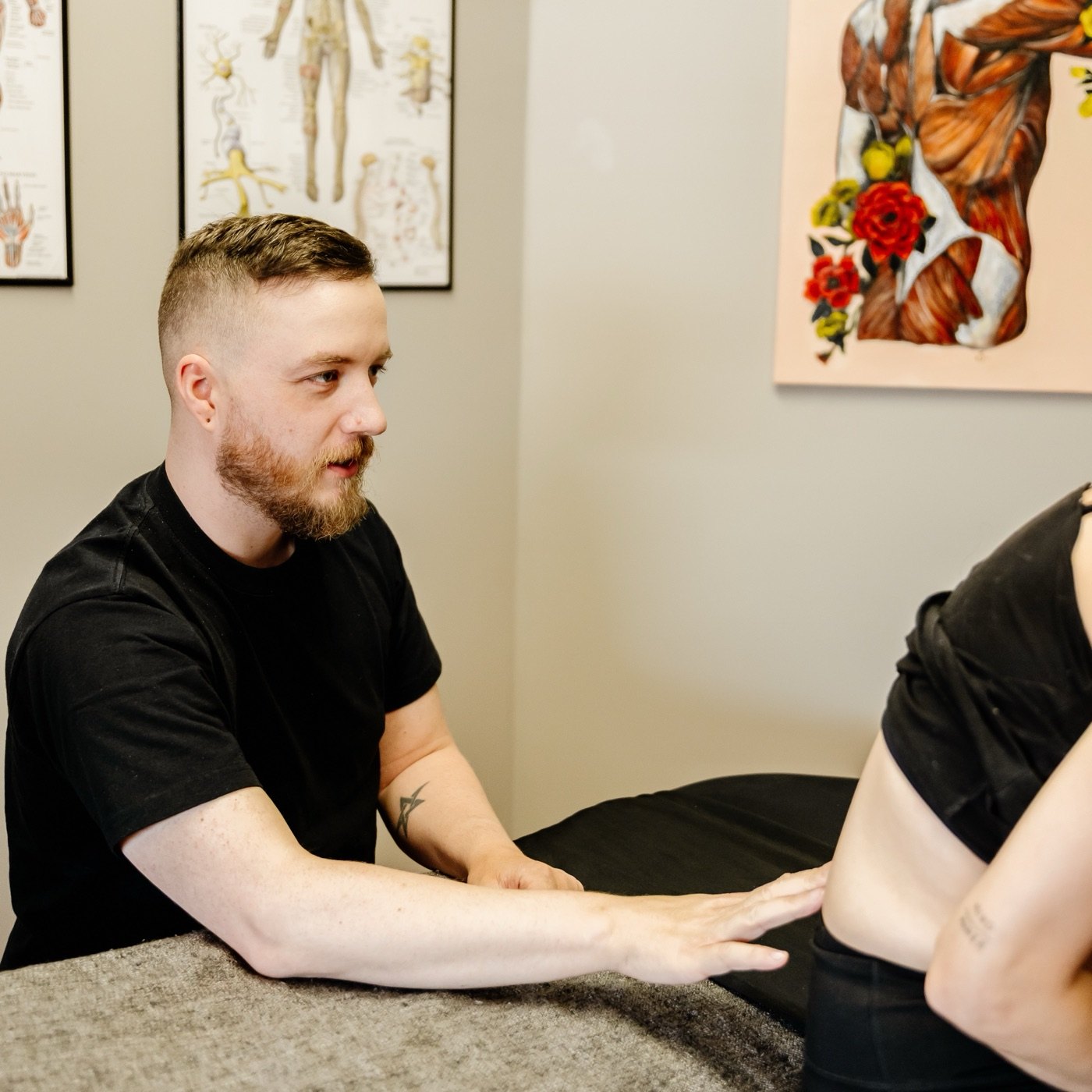
If you book a RAPID appointment expecting to lie still while I use oil or lotion, you’ll notice the difference pretty quickly.
RAPID NeuroFascial Reset combines specific hands-on pressure with guided movement. You take an active part in the appointment, and we check how the area feels and moves as we go.
RAPID is an approach I use within massage therapy for pain and restricted movement. I maintain contact on a specific area while guiding you through a movement, then reassess your response.
RAPID training emphasizes the nervous system’s role in pain and movement. In the clinic, the practical focus is on what you’re experiencing, how you move, and whether treatment is helping with the things you want to do.
Before treatment, I want to know what’s bothering you, when you notice it, what makes it better or worse, and what you’d like to do more comfortably.
You don’t need to describe it perfectly. Show me where you feel it and tell me what you notice. We’ll discuss whether RAPID is suitable, what the treatment involves, and any relevant risks or alternatives before you decide to proceed.
I may ask you to try a movement within a range you can tolerate. That gives us a starting point. During treatment, I apply specific hands-on pressure while you follow a guided movement. Then we check whether anything feels different.
We may repeat that process several times. Your feedback helps me adjust the contact, pressure, position, or movement. Depending on the assessment, we may also work with nearby areas that contribute to the movement. I’ll explain why before we do.
RAPID is usually performed through clothing without oil or lotion. Wear comfortable clothing that lets you move easily.
You may be sitting, standing, or lying on the table, depending on the area and movement we’re working with.
People ask about RAPID for a range of concerns, including neck or shoulder discomfort, low-back or hip pain, knee pain, and foot or ankle symptoms. Some come in with a diagnosis such as sciatica or plantar fasciitis. A diagnosis alone doesn’t tell us whether RAPID is appropriate, so the assessment still matters.
Jaw pain and restricted jaw movement may also be part of the assessment. If appropriate, treatment can include external work around the jaw and related areas. Intraoral treatment is separate, optional, and requires specific consent before we begin.
You don’t need to be an athlete to discuss RAPID. The starting point is what’s getting in the way of your work, hobbies, or everyday movement.
The focused pressure and movement can feel intense or uncomfortable. Tell me what you’re feeling so I can adjust. You can ask for less pressure, a different movement, a pause, or to stop at any time.
Pain tolerance is not a test you need to pass. If you notice sharp, unusual, or increasing pain, tell me right away so we can stop and reassess.
Responses vary. You may notice a change in movement or symptoms, little change, or temporary tenderness or soreness. Soreness is not proof that treatment worked.
We’ll discuss activity and home care based on your situation, including any guidance from your other health care providers. You don’t need to force stretching or repeatedly test a sore area. Let me know if you have concerns afterward.
There isn’t a set number that fits everyone. We’ll review your symptoms, movement, and day-to-day function, then decide whether further treatment makes sense.
If you aren’t making useful progress, we can adjust the plan or discuss another approach or provider. The aim is care that fits your needs.
We can talk about what’s bothering you, what you’d like to get back to, and whether this approach makes sense for you.